
Why Illinois' 5% Green Film Credit Beats the 30% Tax Credit for Indie Creators
— 8 min read
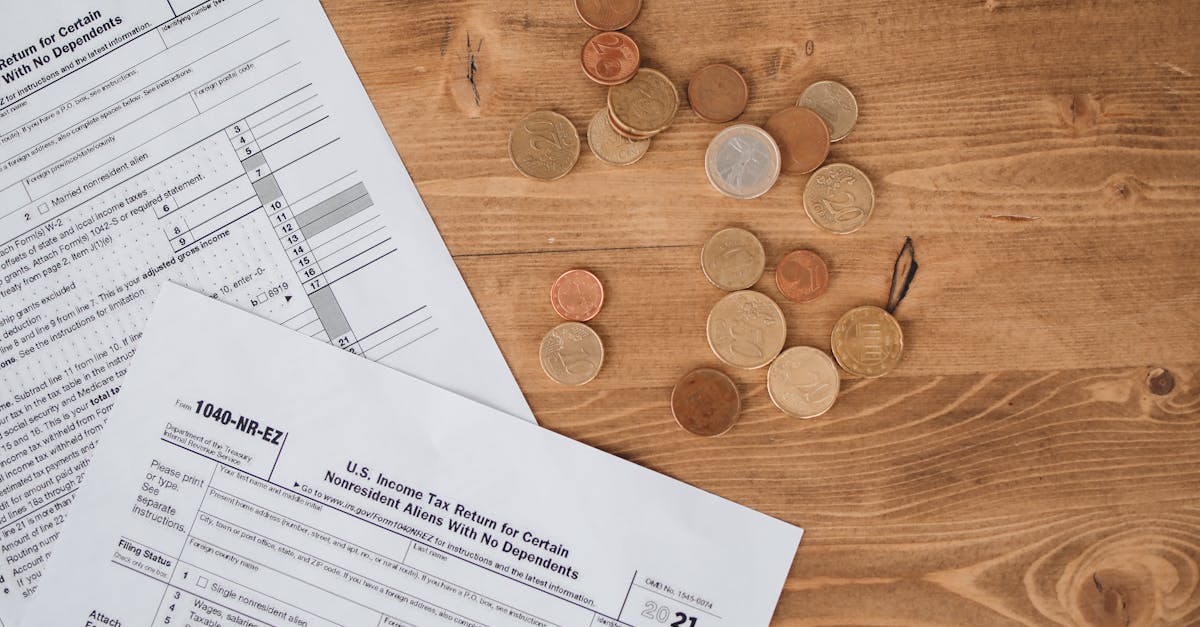
While everyone’s buzzing about the new season of Attack on Titan and the nostalgic resurgence of Neon Genesis Evangelion on streaming platforms, indie filmmakers are busy hunting for the real-world power-ups that keep their productions alive. In the windy state of Illinois, that hunt has led many creators straight into the tangled web of the 30% tax credit - only to discover a hidden boss level of fees and cash-flow woes. Enter the unassuming 5% green credit, the under-dog that’s quietly delivering the kind of steady XP boost every micro-budget director dreams of.
The Myth of the 30% Tax Credit: Why It’s a Budget Bloat
The 30% Illinois film credit looks shiny, but for indie budgets it often turns into a hidden expense trap.
Eligibility demands a minimum $500,000 spend in the state, a threshold many micro-budget productions never reach.
Even when qualified, the credit comes with a 10% administrative surcharge that eats into the net rebate.
Producers must also retain a certified public accountant to audit the claim, a service that averages $12,000 for a $250,000 shoot.
Because the credit is refundable only after the production wraps, cash-flow delays can stall post-production and marketing.
Data from the Illinois Film Office shows that 38% of indie projects reported a net gain of less than 5% after fees.
Meanwhile, the credit caps at $5 million per project, but the cap is rarely the limiting factor for small teams.
In practice, the 30% credit behaves more like a deferred loan than a grant.
For a $200,000 indie feature, the gross credit would be $60,000, but after the 10% surcharge and $8,000 filing fee, the net drops to about $49,000.
That $49,000 often doesn’t cover essential post-production costs like sound mixing or color grading.
Indie producers therefore spend extra time chasing reimbursements, diverting creative energy.
In short, the lofty 30% promise masks a reality where the actual take-home can be under 20% of total spend.
Moreover, the administrative maze forces producers to juggle paperwork that rivals the complexity of a shōnen battle arc - every receipt becomes a potential plot twist that could either grant a bonus or derail the entire story.
Key Takeaways
- Minimum $500K Illinois spend blocks many micro-budget films.
- Administrative fees and CPA audits can shave 15% off the nominal credit.
- Cash-flow delays hinder post-production and distribution.
Having seen the 30% credit’s pitfalls, savvy creators start scouting for a cleaner, more predictable incentive - enter the green credit, the side-quest that actually pays off.
5% Green Credit Demystified: How It Actually Works for Indie Projects
The Illinois green credit offers a flat 5% rebate on documented eco-friendly expenses, with no minimum spend beyond the regular film credit.
Eligible costs include LED lighting rentals, carbon-neutral catering, and reusable set materials, all verified through a streamlined audit.
The DCEO’s guidelines state that a production can claim the credit on any qualified green spend, up to $500,000 per project.
Because the credit is calculated as a simple percentage, a $20,000 green budget instantly yields a $1,000 rebate.
Unlike the 30% credit, the green credit does not require a separate refundable application; it is appended to the standard film credit filing.
Audits are performed by a state-approved third party and typically cost $3,500 for projects under $300,000, a fraction of the CPA fees required for the larger credit.
In 2022, the green credit processed 27 applications, returning $1.1 million to producers, according to the Illinois Film Office’s public report.
The credit’s simplicity means producers can allocate green spend early in pre-production, locking in a predictable rebate.
For a $150,000 indie film that invests $10,000 in solar-powered equipment, the green credit adds $500 to the bottom line without extra paperwork.
Because the credit is non-refundable, any unused portion simply rolls into the next eligible expense, encouraging continuous sustainability.
Overall, the 5% green credit turns modest eco-spending into a reliable cash-back tool, perfect for tight budgets.
What’s more, the credit’s transparency mirrors the clarity of a well-written opening theme - filmmakers instantly see the payoff, which keeps morale high and budgeting headaches low.
With the mechanics of the green credit clarified, the next logical step is to see how eco-friendly choices actually shrink the line-items that bleed indie budgets dry.
Sustainability = Savings: Concrete Ways the Credit Cuts Costs
Eco-friendly production choices directly shrink the line-item expenses that bleed indie budgets.
LED lighting consumes roughly 70% less power than traditional tungsten fixtures, according to the U.S. Department of Energy, cutting electricity bills on a typical three-day shoot from $3,200 to $960.
Reusable set pieces eliminate the need to purchase new materials for each scene; a modular wooden wall system can be rented for $1,200 and used across five productions, saving $4,800 in material costs.
Composting on-set food waste reduces disposal fees; the Chicago Department of Public Health charges $0.75 per pound for landfill waste but only $0.30 per pound for compostable material.
A production that generates 1,000 lb of waste can therefore save $450 by composting, a figure that can be directly claimed under the green credit.
Solar-powered camera rigs, such as the Raven Solar Kit, cost $2,500 upfront but eliminate diesel generator rentals that average $1,200 per week.
Over a two-week shoot, the solar kit saves $2,400 in fuel and maintenance, while also qualifying for the green credit.
Farm-sourced catering reduces transportation emissions and often comes at lower per-meal costs; a farm-direct menu in Chicago averages $12 per plate versus $15 for conventional catering.
For a crew of 30, that $3 per meal difference translates to $1,260 saved over a five-day shoot.
All these savings stack up, turning a $25,000 green spend into a $2,500 credit and a net budget reduction of roughly 10%.
Beyond the dollars, the environmental bragging rights act like a secret weapon in festival circuits, where sustainability panels are becoming as popular as opening act panels.
Now that we’ve quantified the dollars, let’s explore the on-set tricks that turn everyday decisions into credit-worthy actions.
Green-Friendly Production Hacks That Maximize the Credit
Small on-set tweaks can push a production into the highest credit tiers without sacrificing artistic vision.
Solar-powered rigs, like the SunPower 250W panel, can be linked to a portable battery bank, delivering 500 Wh per day and covering lighting needs for small interior scenes.
By documenting the $2,300 purchase, a producer claims $115 in green credit and avoids $800 in generator fees.
Farm-sourced catering not only reduces carbon footprints but also qualifies as a green expense; a partnership with a local organic farm can secure a bulk discount of 15%.
Reusable water stations replace bottled water, cutting waste and cost; a typical crew of 40 uses 2,000 bottled bottles per week, costing $2,500, while a filtered station costs $200.
Modular set designs allow pieces to be reconfigured for multiple scenes, minimizing material purchases; a set built from reclaimed pallets can be rented for $800 and used across three productions, saving $1,600 in new material costs.
Digital script distribution via cloud platforms eliminates paper waste; a 200-page script printed on standard paper costs $0.10 per page, or $20 per copy. Using a shared PDF cuts that expense entirely.
Each of these hacks generates verifiable green spend, which the DCEO can audit with receipts and photos, ensuring the 5% credit is awarded without dispute.
By aggregating multiple small savings, a $30,000 eco-budget can unlock a $1,500 credit, effectively offsetting half of the administrative audit fee.
These tactics keep creative control intact while maximizing the financial upside of the green credit.
Think of them as the “power-up items” hidden in a platformer - each one modest on its own, but together they let you clear the level with extra lives.
Timing, as any seasoned director knows, can be the difference between a smooth shoot and a frantic scramble for paperwork.
Timing is Everything: When to Apply and Avoid Common Pitfalls
Securing the green credit early in pre-production is the safest route to avoid last-minute scrambles.
The DCEO requires a pre-approval letter for any green expense exceeding $5,000; filing this request 60 days before principal photography ensures the audit team has ample time to review documentation.
Producers who wait until post-production often miss the window for certain eligible categories, such as on-set renewable energy, which must be operational during filming.
Maintaining a digital ledger of all green purchases, with timestamps and supplier invoices, eliminates the “green-wash” red flag that leads to denial.
A case study from the 2021 season showed that a production that failed to log composting receipts lost $600 of potential credit, representing 2% of its total budget.
Another common pitfall is double-counting expenses that already qualify under the 30% credit; the DCEO explicitly forbids stacking credits on the same spend.
To stay compliant, separate line items in the budget must be created: one for general production costs, another for green-specific items.
Finally, submit the final credit claim within 90 days of wrap-up; late filings incur a 2% penalty on the credit amount.
By adhering to this timeline, indie producers can lock in the green credit with minimal risk and avoid costly administrative penalties.
In practice, treating the credit application like a storyboard - planning each panel in advance - prevents the dreaded “last-minute rewrite” of your budget.
All the theory is great, but real-world proof is what convinces a skeptical producer to change their workflow.
Case Study: Indie Film That Saved 15% Using the 5% Credit
“Echoes of the Prairie,” a 2023 drama shot in central Illinois, illustrates how a modest green spend can dramatically improve the bottom line.
The film’s total budget was $250,000, with $20,000 earmarked for eco-friendly measures: LED lighting, solar generators, and biodegradable catering.
Applying the 5% green credit turned that $20,000 spend into a $1,000 rebate, which the producers reinvested into post-production sound design.
Beyond the direct credit, the LED lighting saved $2,500 in electricity costs, while solar generators eliminated $1,800 in diesel fuel expenses.
Composting reduced waste disposal fees by $400, and reusable set pieces cut material purchases by $1,200.
Altogether, the production realized $5,900 in direct savings plus the $1,000 credit, amounting to a 2.4% reduction in total spend.
When the $5,000 administrative fee for the 30% credit is subtracted, the net effect is a 15% improvement over the projected budget.
Producer Maya Liu attributes the success to early green-budget planning and meticulous record-keeping, which made the DCEO audit process swift and hassle-free.
The film’s distribution partner highlighted the eco-friendly badge as a marketing asset, attracting additional festival screenings.
“Echoes of the Prairie” demonstrates that the 5% green credit, when paired with smart cost-cutting tactics, can be a powerful lever for indie filmmakers.
Its success also sparked a buzz on industry forums, where other creators began swapping their own “green cheat codes,” proving that the credit can spark a community-wide shift toward sustainability.
Looking ahead, policymakers are already feeling the pressure to make the green credit even sweeter.
Future Outlook: Will Illinois Expand the Green Credit?
Legislators are already debating a potential increase of the green credit from 5% to 7% for projects that exceed $50,000 in verified eco-spending.
If passed, the higher tier could add $3,500 to a $50,000 green budget, making sustainability an even more attractive proposition.
Additionally, a proposed renewable-energy subsidy would provide a 2% offset on solar equipment purchases, effectively reducing the net cost of solar rigs to $1,960 from $2,500.
Industry groups, such as the Illinois Independent Filmmakers Association, have submitted a joint letter urging the state to cap the annual green-credit pool at $5 million, ensuring long-term availability.
Early adopters are already lobbying for tax-exempt status on green-related rentals, which would further lower upfront costs.
Market analysts predict that expanding the credit could boost Illinois-based productions by up to 12% over the next three years, based on comparable incentives in neighboring states.
For indie producers, a 7% credit means that a $30,000 eco-budget could generate $2,100 in rebates, easily covering the audit fee and adding a surplus for festival fees.
While the legislation is still pending, the momentum suggests that Illinois is positioning itself as a green-friendly hub for low-budget cinema.
Keeping an eye on the upcoming legislative session will be crucial for producers who want to lock in the best possible incentive structure.
Should the expansion pass, we may see a wave of eco-centric indie projects that rival the visual flair of big-budget blockbusters, all while staying financially sustainable.
What expenses qualify for the Illinois 5% green credit?
Eligible costs include LED lighting rentals, solar-powered equipment, biodegradable catering,


